
- All
- Product Name
- Product Keyword
- Product Model
- Product Summary
- Product Description
- Multi Field Search
Please Choose Your Language
Views: 0 Author: Site Editor Publish Time: 2026-07-21 Origin: Site


A premium unboxing experience drives brand loyalty, but over-engineering your packaging quickly erodes profit margins. Creating memorable moments for customers matters deeply in competitive markets. However, ignoring the physical realities of shipping can devastate your bottom line. Specifying a custom packing box requires balancing aesthetic goals against harsh logistical truths. You must evaluate material strength, dimensional weight, printing tooling costs, and assembly time. Failing to optimize these elements leads to wasted resources and damaged goods.
Before requesting quotes from manufacturers, brands must define their specific crafts carefully. This means selecting the ideal combination of base materials, structural engineering, and printing techniques. We will guide you through matching these technical specifications to your product's weight, transit method, and budget constraints. Read on to discover how to design packaging delivering both structural integrity and visual impact.
Many brands fail by applying retail-shelf aesthetics directly to e-commerce transit boxes. This common mistake wastes significant budget. High-end matte finishes and intricate foil stamping look beautiful on a store shelf. However, courier networks subject parcels to conveyor belts, stacking pressure, and friction. Shipping a highly decorated exterior often results in scuffed artwork arriving at the customer's door. You must separate your protective requirements from your visual branding goals.
To avoid misallocating your packaging spend, you need to understand where your custom packaging sits in the supply chain. Industry standards divide packaging into three distinct levels. You must identify the primary role of your box before selecting materials.
Understanding transit realities ensures better material selection. E-commerce packaging requires high crush resistance. It also demands tamper-evident closures to prevent theft during transit. Retail packaging prioritizes high-resolution graphics. It relies on tactile finishes to attract shoppers in physical aisles. You should never force a single box to perform both functions without expecting severe compromises.
Selecting the correct base material dictates the structural integrity and aesthetic potential of your design. The substrate you choose interacts directly with printing inks. It also determines how well your product survives transit. We categorize materials into three main groups based on weight and application.
Eco-Friendly Kraft provides a highly sustainable profile. This material remains uncoated and 100% recyclable. It visually signals environmental responsibility to your customers. However, Kraft absorbs ink heavily. You should pair it with minimalist, dark ink designs. Vibrant colors often appear muted on unbleached Kraft boards.
Rigid Board serves luxury goods and high-ticket electronics. This material is up to four times thicker than standard folding cartons. Manufacturers often wrap thick greyboard in premium textured paper. Rigid boxes usually feature two-piece lid and base styles. They offer unparalleled unboxing experiences but cost significantly more to produce and ship.
Cardboard & Corrugated represents the industry standard for most shipping needs. Corrugated boards consist of fluted paper sandwiched between flat linerboards. This structure offers incredible strength-to-weight ratios. The industry measures this strength using flute sizing.
Corrugation grades dictate the thickness and crush resistance of your box. Selecting the wrong flute size either risks product damage or wastes dimensional weight.
| Flute Type | Thickness | Primary Characteristics | Best Use Cases |
|---|---|---|---|
| E-Flute | ~1/16 inch | Thin, lightweight, excellent smooth surface for high-quality printing. | Cosmetics, custom mailer boxes, retail displays. |
| B-Flute | ~1/8 inch | Thicker profile, offering better puncture and crush resistance. | Medium-weight items, apparel boxes, book shippers. |
| C-Flute | ~11/64 inch | Heavy-duty protection, highly resistant to vertical compression. | Fragile goods, hardware, standard master shipping boxes. |
Choosing an E-flute makes sense when prioritizing sharp printing and low shipping weight. Conversely, C-flute serves best when moving heavy ceramics across the country. Always test your selected flute grade by shipping a prototype through standard courier networks.
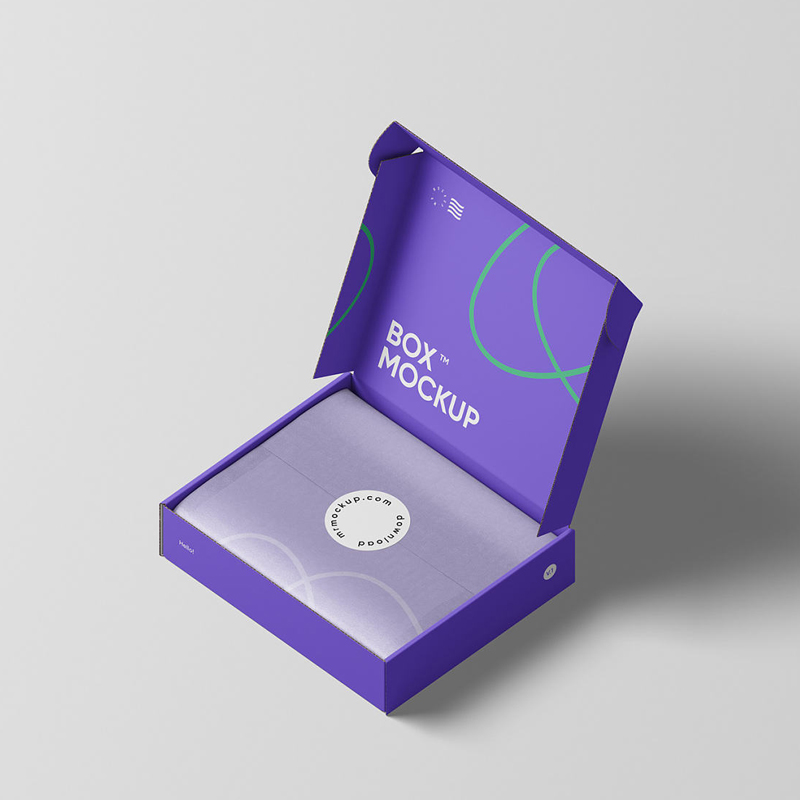
Applying your artwork to the box requires choosing a specific printing craft. This decision directly impacts your upfront costs and your minimum order quantities. A visually stunning design means nothing if the printing technique pushes the per-unit cost beyond your margin limits. We must evaluate four primary solution approaches for applying artwork.
Flexographic (Flexo) Printing remains the industry standard for corrugated shippers. It operates like a massive rubber stamp applying ink to the board. Flexo offers the lowest per-unit cost at high volumes. However, it requires upfront physical plate fees. It works best for 1-2 color, edge-to-edge minimalist designs. You should avoid complex gradients when using flexo.
Lithographic (Litho/Offset) Printing produces magazine-quality, high-resolution imagery. Manufacturers typically print the artwork onto specialized paper. They then laminate this paper onto the corrugated board. Litho delivers exceptional fidelity and vibrant colors. It commands a higher cost and requires significant setup fees. Brands reserve this craft strictly for premium retail packaging or high-end mailers.
Digital Printing applies CMYK ink directly to the board. It requires absolutely no tooling or physical plate fees. Digital printing serves as the optimal choice for short runs. It allows brands to produce multiple SKU variations easily. You can split-test different designs without incurring setup penalties. While the setup cost is zero, the per-unit cost remains higher than flexo at massive scales.
Silkscreen Printing provides an excellent solution for small-batch or DIY branding. It uses screens to push water-based inks directly onto Kraft surfaces. The ink lays down thickly, creating a highly tactile feel. Silkscreening works beautifully for limited editions. Unfortunately, it proves difficult to scale efficiently for mass production.
| Printing Craft | Upfront Tooling Cost | Image Fidelity | Ideal Order Volume |
|---|---|---|---|
| Flexographic | Moderate to High | Low (Best for simple logos) | High (1,000+ units) |
| Lithographic | Very High | Exceptional (Photo-realistic) | Very High (3,000+ units) |
| Digital | Zero | High (Excellent CMYK) | Low to Medium (1 - 500 units) |
| Silkscreen | Low (Screen setup) | Medium (Thick ink deposit) | Very Low (DIY to 100 units) |
The physical geometry of your custom packing box influences everything from shipping durability to warehouse labor. Structural engineering defines how the package folds, locks, and protects its contents. You must evaluate various box styles to match your operational workflow.
Mailer Boxes utilize a roll-end tuck front design. They require no packing tape to assemble or seal cleanly. This structure provides a highly satisfying unboxing aesthetic. Mailers present products beautifully upon opening. They serve perfectly for subscription boxes and premium kits. However, their internal void space often requires additional fill for fragile items.
Regular Slotted Containers (RSC) represent the most material-efficient shipping boxes available. They feature flaps meeting squarely in the center. RSCs offer exceptional economy for bulk shipping. They do require packing tape to seal the top and bottom. You sacrifice unboxing elegance for maximum logistical efficiency.
When designing lightweight retail cartons, the locking mechanism controls assembly speed. Labor costs add up quickly during fulfillment. You should carefully select from these standard bottom closures:
A common mistake involves choosing a cheap tuck-end box for a heavy product. The bottom can easily give out during handling. Always match the locking mechanism to the product weight.
Many emerging brands assume they need full-coverage exterior printing and exact custom sizing for every single SKU. This implementation reality quickly inflates costs. It also complicates warehouse inventory management. Stocking thirty different printed box sizes ties up crucial cash flow.
Smart operators utilize the Die-Cut Insert Strategy. Instead of buying expensive, environmentally harmful bubble wrap, they engineer custom die-cut corrugated inserts. These clever inserts lock products securely in place inside a generic, standard-sized outer box. The inserts cost only pennies at scale. They drastically reduce damage rates by immobilizing the item. This approach provides premium protection without the exorbitant cost of full-exterior custom printing.
You can standardize your outer shippers to just three sizes. You then customize only the cheap internal corrugated inserts to fit various product shapes. This hybrid strategy simplifies your supply chain immensely.
If Minimum Order Quantities (MOQs) for fully printed boxes remain out of reach, you must stage your customization. Small and medium businesses (SMBs) can utilize alternative branding methods. You can pair blank, perfectly sized stock boxes with creative accessories. Use custom-branded packing tape to seal the edges securely. Wrap the internal items in custom tissue paper. Apply branded ink stamps directly to the blank Kraft exterior. These tactics help you achieve a highly custom look at a fraction of the cost.
Selecting the right specifications for your packaging requires a methodical approach. You must balance visual appeal against the harsh realities of supply chain logistics. Every choice regarding material grades, printing methods, and locking mechanisms affects your final profit margin.
Apply strict shortlisting logic when evaluating packaging partners. You should prioritize vendors who provide structural die-lines and blank physical prototypes. Demand to test these prototypes for assembly speed and transit durability. Never commit to expensive printing plates until the physical structure performs flawlessly in real-world conditions.
Take action by auditing your current product dimensions today. Calculate the acceptable dimensional weight for your 3PL or preferred carrier. When reaching out to suppliers, request quotes based on specific material grades. Ask for E-flute or B-flute explicitly. Avoid vague requests for "cardboard." Clear specifications yield accurate quotes and superior packaging.
A: Costs range wildly based on specifications. Simple, high-volume RSC shippers can cost as little as $0.10 per unit. Multi-process rigid boxes with premium finishes easily exceed $10.00 each. The final price is dictated by base material, overall print coverage, tooling requirements, and total order volume.
A: Uncoated, unlaminated Kraft corrugated board represents the greenest choice. Pair this material with water-based or soy-based inks. You must avoid plastic laminations or UV spot treatments. These chemical additions severely hinder the recycling process at municipal facilities.
A: Traditional crafts like Flexo and Litho printing require physical metal or polymer plates to stamp the ink onto the board. Custom structural shapes also require physical steel-rule cutting dies. Digital printing bypasses these physical tooling fees entirely but carries a higher per-unit cost.
